

What we build
Solar energy.
We develop solar at two scales. Community solar gardens let households and businesses share in a local project through their utility bill. Utility-scale solar delivers clean power to electric cooperatives, municipalities, investor-owned utilities, and corporate buyers. Every project is sized to the land, the interconnection, and the load it serves.
Community solar gardens
Community solar is how most households get to participate in the clean-energy transition. No rooftop, no contractor, no five-figure check. Just a subscription to a local solar project on the grid that serves your neighborhood, and a utility bill credit that arrives every month.
A Saga community solar garden is typically a 1 to 10 MW solar array connected to the local distribution grid. Residents, small businesses, and municipalities in the same utility territory subscribe to offset their own electricity use and receive a monthly bill credit. The landowner hosting the project earns a 25 to 30 year lease payment that reliably escalates. Everyone's incentives line up.

Who community solar is for
- Households that want clean energy but rent their home, live in a condo, or have a roof that doesn't support solar.
- Low- and moderate-income subscribers. Most state programs require a portion of each project to be reserved for LMI households, and these allocations are where community solar does its most important work.
- Small businesses looking for a hedge against utility rate volatility without the capital cost of owning their own system.
- Municipalities and universities anchoring projects in the communities they serve.
Utility-scale solar
Every utility-scale project we develop is anchored by a real offtaker: an investor-owned utility, a cooperative, a municipal utility, or a corporate buyer looking to purchase clean energy.
- 50 to 200 MW-AC, single-axis tracker
- Bifacial modules, mainstream inverter platforms, utility-grade switchgear
- Dedicated space within grazing or agricultural land
- Utility, cooperative, municipal, or corporate offtake
- Optional co-located battery storage as a hybrid project
- Optional agrivoltaic dual uses

How we think about siting
Interconnection queue, substation capacity, and transmission constraints set the ceiling on project size. Our screening process starts with a transmission study and works backward into land control, permitting risk, county posture, and environmental diligence. If a site passes those checks, the project moves forward.
Agrivoltaics: solar and agriculture on the same land
Agrivoltaics, also called dual-use solar, keeps land in agricultural production while it generates power. Sheep can graze beneath the panels, shade-tolerant crops can grow between raised rows, and native flowering plants can provide pollinator habitat. Landowners keep farm income alongside their lease payment, and communities keep farmland in production.
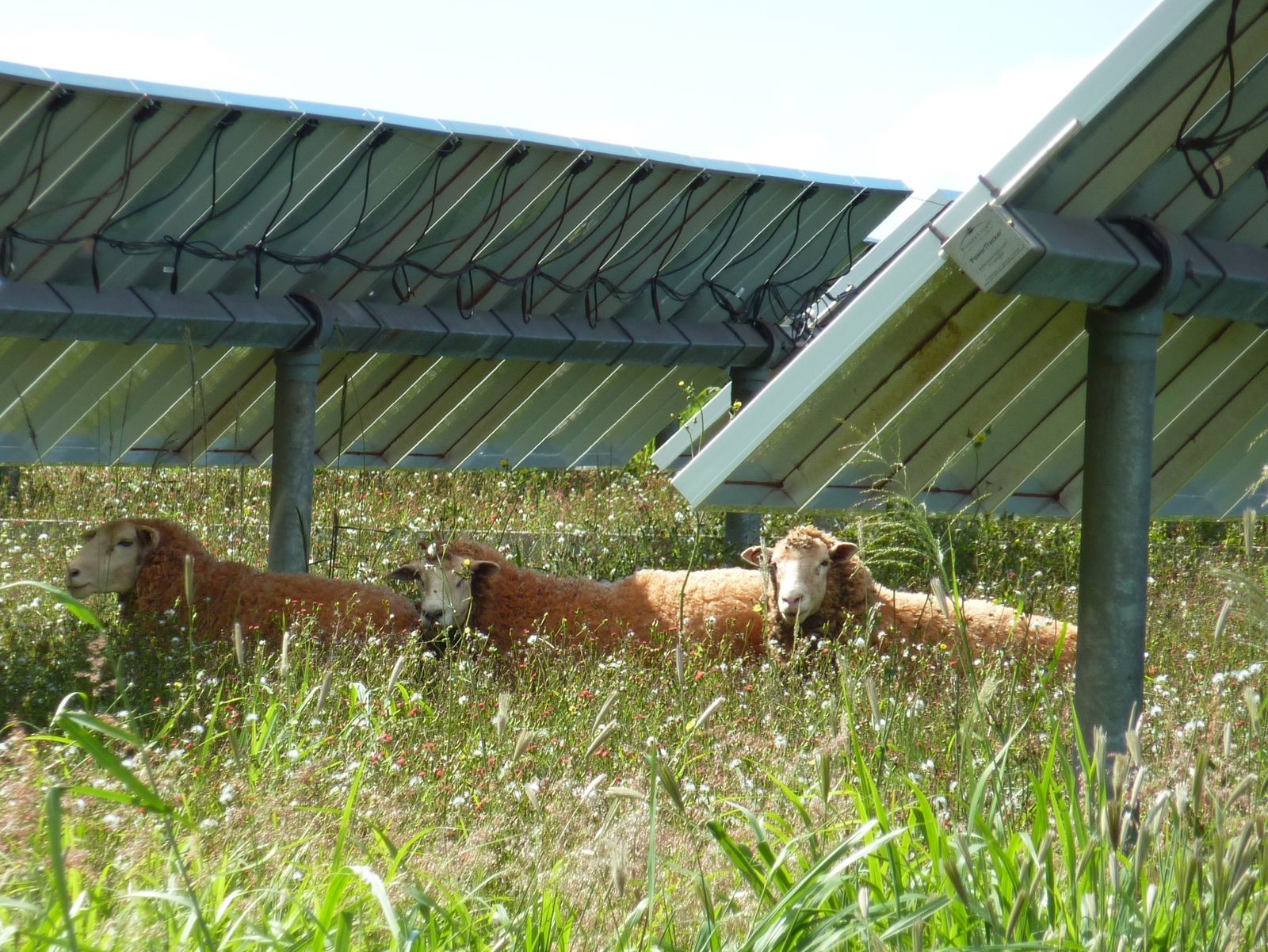
Research from Oregon State University found that lambs raised under solar panels grow as well as lambs on open pasture. Agrivoltaics doesn't suit every site, so we weigh it early and work with landowners and local ranchers to choose the use that fits the land.
Community benefit is table stakes
Every project we develop carries community benefits, including tax revenue, local jobs, and infrastructure improvements.